Stitched into Being: The Anatomy of a Book Revealed
This exhibit is no longer on display.
It was on view in Phillips Memorial Library from January 2026 to May 2026. While the physical exhibit has concluded, you can still explore its highlights and legacy on this page.
Have you ever wondered how books are made? What technology or tools have changed the process, and what has remained the same? Visit the Phillips Memorial Library to explore Stitched into Being: The Anatomy of a Book Revealed. Curated by Hilary Gunnels, Collections Archivist, this exhibit takes a unique, anatomical approach to illustrating the history of the book.
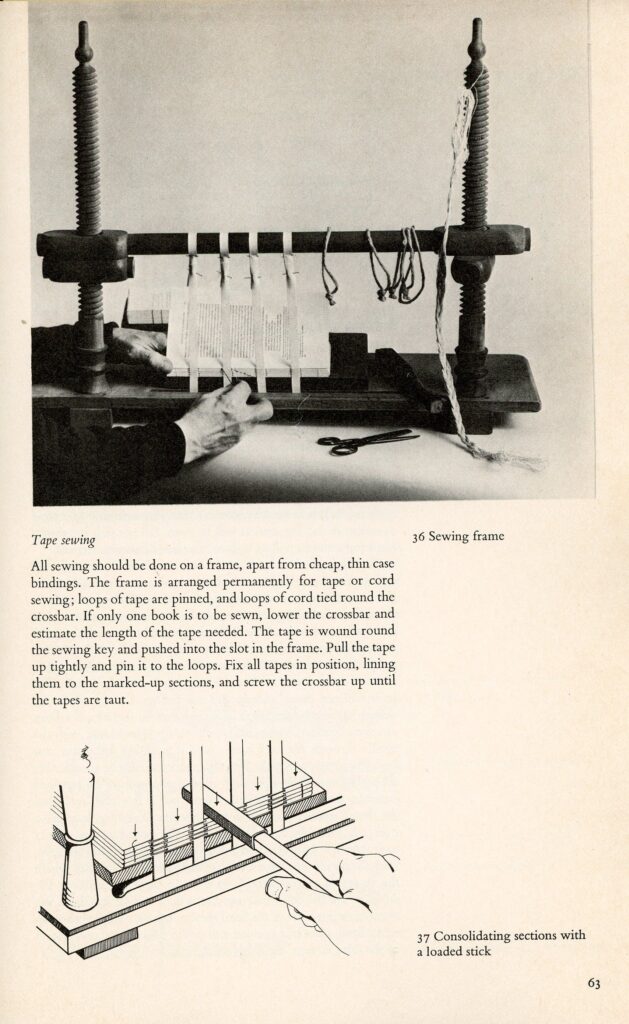
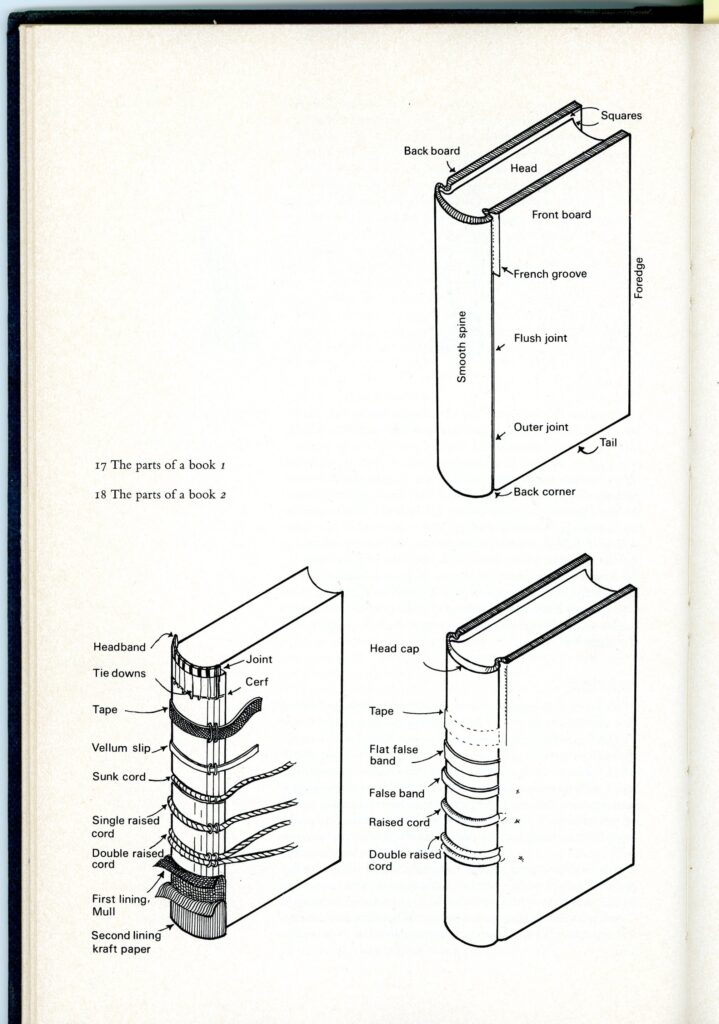
Using specimens from the Providence College Archives and Special Collections, this exhibit dissects various steps of the bookmaking process.
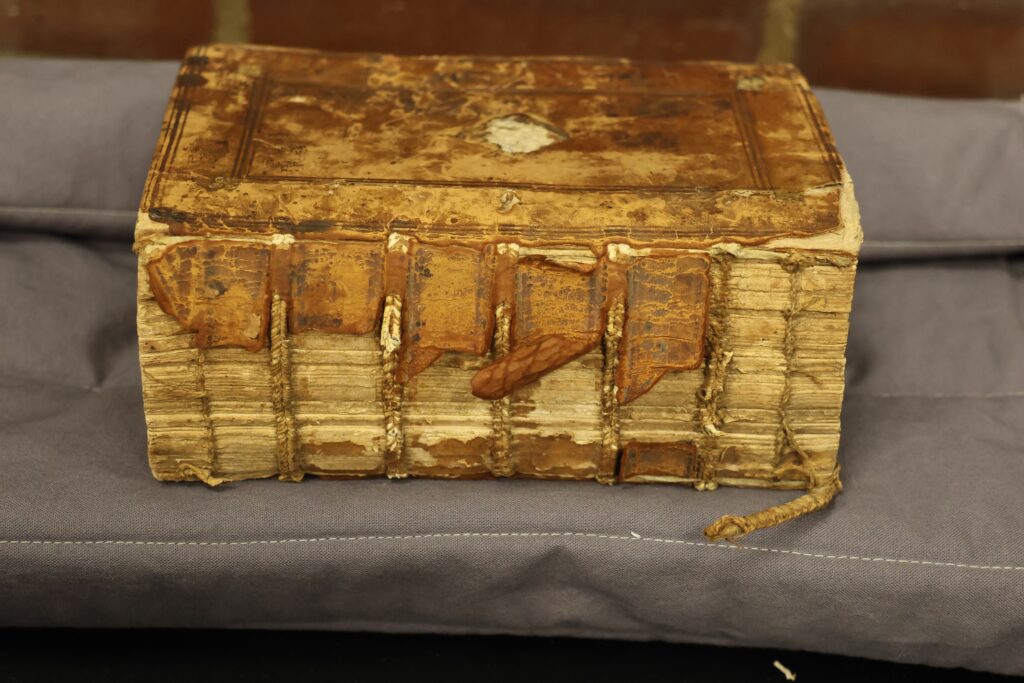
There are many ways these sections may be sewn together, the most durable of which is a raised double cord binding. This specimen from 1577 has endured quite well.
The Comedy of Convocation in the English Church, by Arthur Featherstone Marshall, 1868, Catholic Publication Society, New York.
Vetus Missale Romanum Monasticum Lateranense (translation: the Old Roman Monastic Missal of St. John Lateran) by Emmanuel de Azevedo, S.J., 1752, Printed by Joseph Collins in Rome.
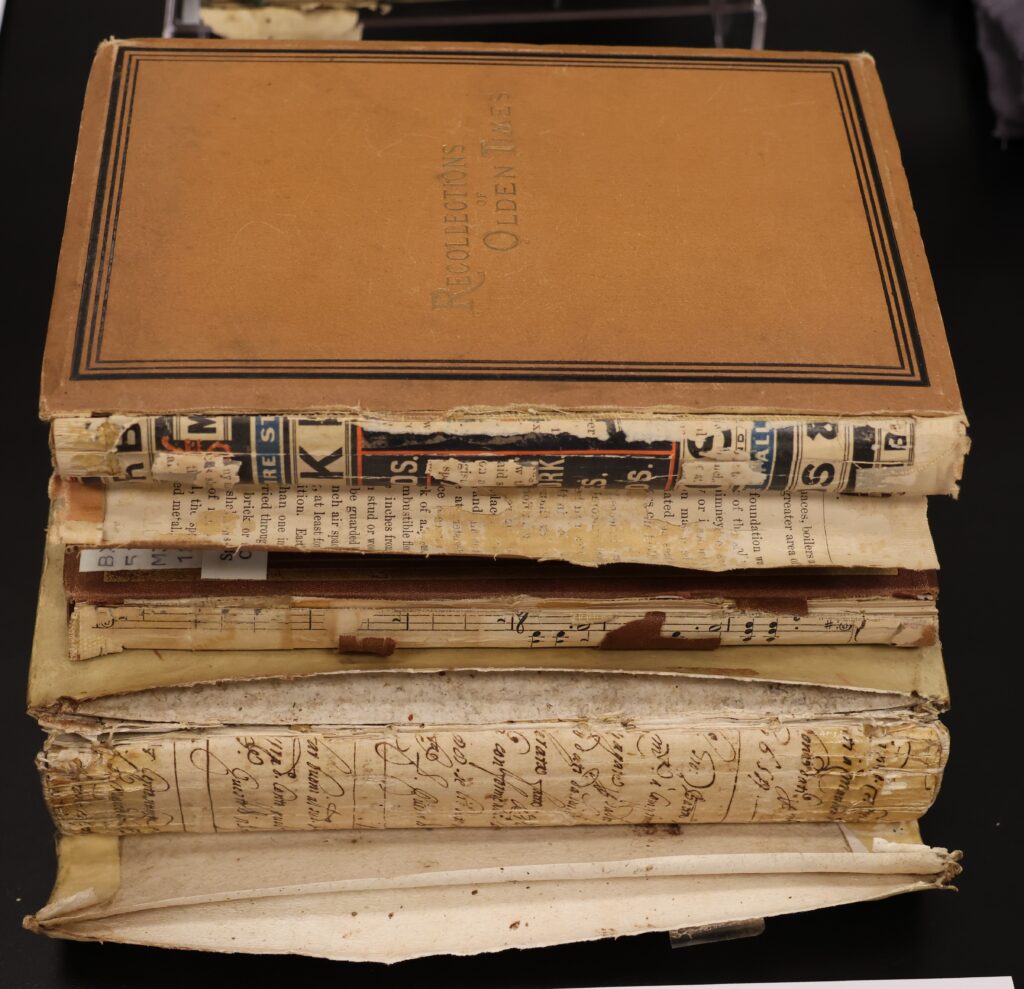
This image of three volumes shows the various materials used in the lining of book spines. On top of the first lining is the second lining, made from rough paper, usually plain, brown kraft paper. Although, it seems, some creators used whatever paper they had lying about!
For questions about the Providence College Archives and Special Collections, our exhibits, or to make an appointment, contact us at pcarchives@providence.edu or 401-865-2578.