A Reading List for Exploring Cambodian American Stories from Thatiana So ’27
Thatiana So ’27 is a Senior Management major and Accounting & Asian and Asian American Studies minor at Providence College. Born and raised in Rhode Island, she came to PC to develop her skills in the business world as well as learn more about her culture in the historical context. Being a first-generation student, she is a proud daughter of two Cambodian war refugees that came to America in the 1970s. In the summer of her junior year at PC, she led an independent study, reading and analyzing Cambodian American narratives, partnering with Dr. D. Colin Jaundrill, an associate professor of History and department chair. Through this experience, she examined how Cambodian American writers navigate identity, family and memory, while also reflecting on her own place within a community shaped by resilience, migration, and cultural perseveration. Thatiana not only gained insight into the diverse experiences of Cambodian Americans across generations but also found inspiration for future creative projects that explore culture, memory, belonging. This research developed a stronger connection to her Cambodian heritage and laid a foundation for future research and creative work as she prepares to visit Cambodia for the first time in over a decade.
Thatiana invites you to read the novels that explore the Cambodian American narrative from different generations, those who had to leave their homes, children of immigrants, and the generation who lives to continue their families’ stories. Below you can learn more about the author and some insights from Thatiana!
Koan Khmer by Bunkong Tuon ⭐️⭐️⭐️⭐️/5
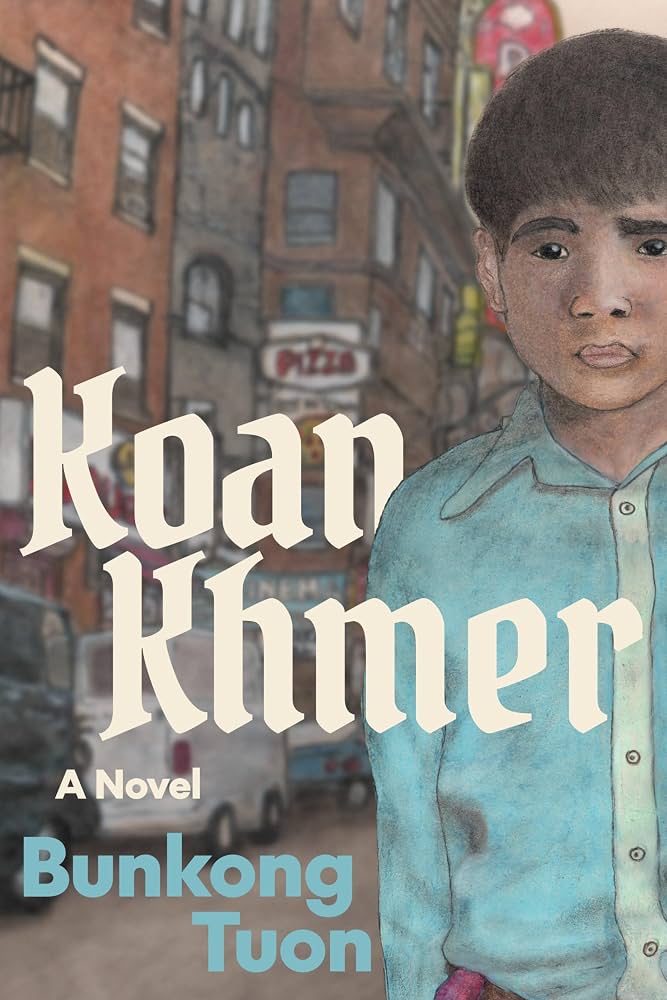
Bunkong Tuon is a Cambodian American poet, novelist, scholar, and educator whose work explores memory, identity, displacement, and the lasting effects of the Khmer Rouge genocide on Cambodian communities. Born in Cambodia before the Khmer Rouge era, Tuon survived the genocide, spent several years in refugee camps in Thailand, and immigrated to the United States with his family in 1982. His experiences as a refugee and survivor have profoundly shaped his writing and scholarship. Tuon is known for blending personal history with reflections on trauma, family, and cultural memory. His debut novel, Koan Khmer (2024), examines the Cambodian American experience through themes of survival, belonging, and healing. Tuon earned his PhD in Comparative Literature from the University of Massachusetts and is a Professor of English at Union College in New York. Through poetry, fiction, and academic work, he preserves and amplifies Cambodian American stories while highlighting the resilience of refugee communities and the importance of remembering history.
Favorite quote: “No one could accuse me of my crime of swearing, since they did not understand the language and thus were not aware of any wrongdoing on my part. Such liberation was that much more rebellious and meaningful because the transgression occurred in the church.” Pp. 54
Thatiana’s Thoughts: This is the perfect book to start out with when it comes to learning more about the displacement and lasting impacts of families moving to America as war refugees. Being set in both in Massachusetts and Long Beach, California, you get the taste of what it feels like to experience the locations of the two biggest Cambodian populations in the United States. I loved the personal growth of the main character, Samnang and his yearning for wanting something more for himself with the support of his community and loved ones.
Afterparties by Anthony Veasna So ⭐️⭐️⭐️⭐️/5
Anthony Veasna So was a Cambodian American writer best known for his short story collection Afterparties (2021). Born in Stockton, California, in 1992 to Cambodian refugee parents, So grew up in one of the largest Cambodian American communities in the United States. He earned a degree from Stanford University and later received an MFA in Creative Writing from Syracuse University. Drawing on his family’s experiences and his own life as a queer Cambodian American, So wrote stories that explore identity, intergenerational trauma, community, and belonging. Although he passed away unexpectedly in 2020 at the age of twenty-eight, Afterparties was published posthumously and received widespread critical acclaim. Through humor, compassion, and vivid storytelling, So offers a nuanced portrayal of contemporary Cambodian American life while honoring the legacy of those shaped by the Khmer Rouge era
Favorite quote: “Part of me wonders if the new generation should be allowed some freedom from the dreams of the dead.” Pp. 238
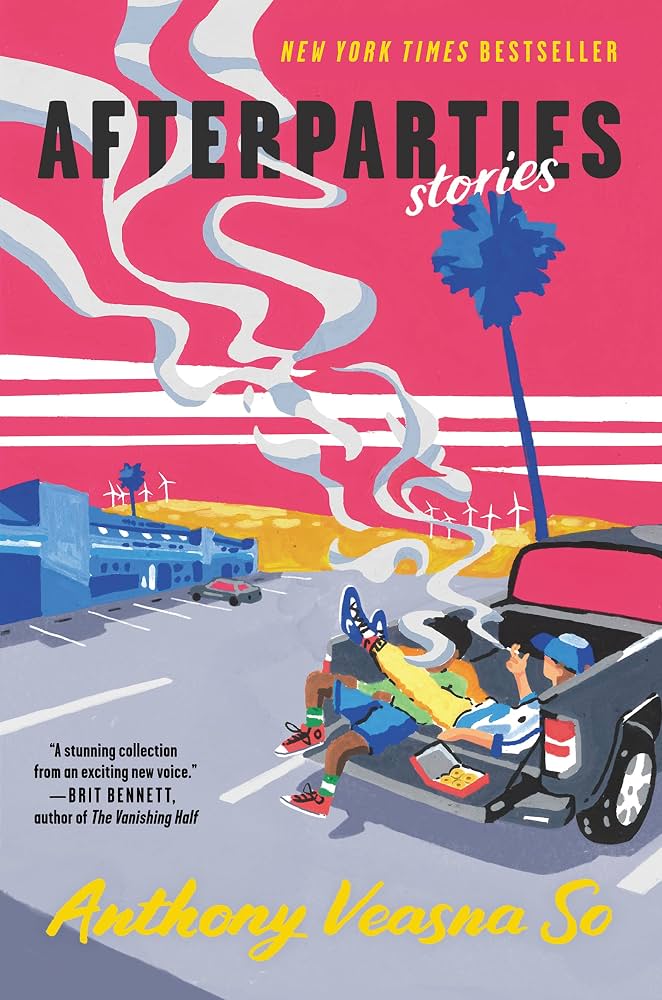
Thatiana’s Thoughts: It was shocking how impactful it was for me to read this collection of short stories. Some of my favorite stories from Afterparties have to do with becoming a temporary monk out of respect of losing a loved one, the aftermath of a Khmer wedding and the drama that goes along with it, and the internal conflict of leaving behind trauma of the war left by the generations that came before us or should we continuing to feel their pain? Afterparties is one of my favorites on this list for showing the complexities of being Cambodian American and how our culture weaves into other part of our identities. (I also love that the author and I share the same last name!)
Kween by Vichet Chum ⭐️⭐️⭐️/5
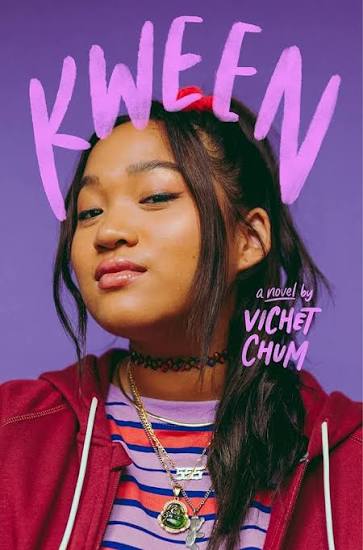
Vichet Chum is a Cambodian American writer originally from Carollton, Texas. As a child of refugees, his work focuses on identity, family, and the lasting impact of history, especially Khmer Rouge, on younger generations. Kween follows Soma, a Cambodian American teenager living in Lowell, MA. Through the novel, her journey explores culture, family expectations, and self-expression, shaping one’s sense of self and highlights her challenges of claiming identity.
Favorite quote: “History is made better or even corrected by the multiplicity of stories. So, tell your story and develop hard scales.” Pp. 159
Thatiana’s Thoughts: Of course, I was going to include the book with my face on it. In all seriousness, this was the inspiration for my research. Kween is the first book I’ve read that the main character is Cambodian American, living in Lowell, MA and weirdly has a very familiar family dynamic as me. I was honored to be able to have the opportunity to be the face of this book and everything it represents for younger Cambodian Americans. I will always be forever grateful for Vichet Chum for writing this story and Mel Taing for photographing this photo!
Ma and Me by Putsata Reang ⭐️⭐️⭐️⭐️⭐️/5
Putsata Reang is a Cambodian-American journalist and author best known for her memoir Ma and Me (2022). Born in Cambodia around 1974, she fled the country as an infant with her family during the Khmer Rouge era and was raised in rural Oregon, where her family worked to rebuild their lives. She later became an accomplished journalist whose work has appeared in major publications like The New York Times, Politico, and The Guardian, and she has lived and worked in countries including Cambodia and Afghanistan. Her memoir explores themes of family, cultural identity, and her struggle to balance Cambodian expectations with her identity as a queer woman, earning critical acclaim and the 2023 Pacific Northwest Book Award.
Favorite quote: “Labels are harder to escape than countries.” Pp. 74
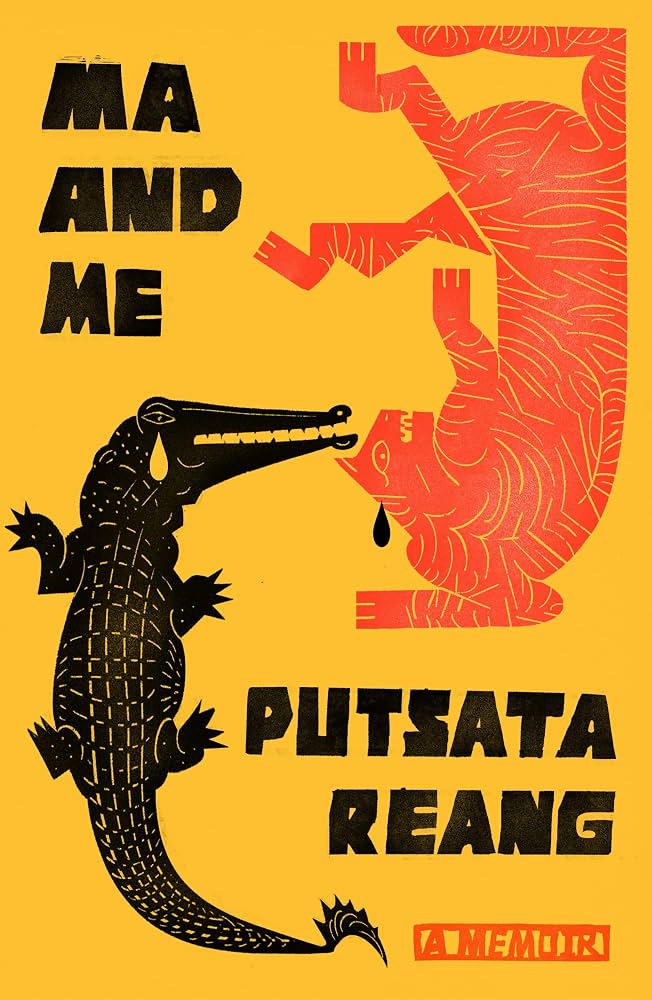
Thatiana’s Thoughts: Ma and Me is easily my favorite book I read from this list. Once I started to read Reang’s story, I could not put it down. Her style of writing is something to be admired and a great inspiration for my own writing. Her memoir explores the idea of doing everything she could to please her mother but eventually hits a glass ceiling when it comes to her sexual identity. I found her stories of going through college, her first journaling job, her time in Afghanistan and Cambodia so meaningful. This is my top recommendation for those interested in memoirs and beautiful writing.
Lulu in the Sky by Loung Ung ⭐️⭐️⭐️/5
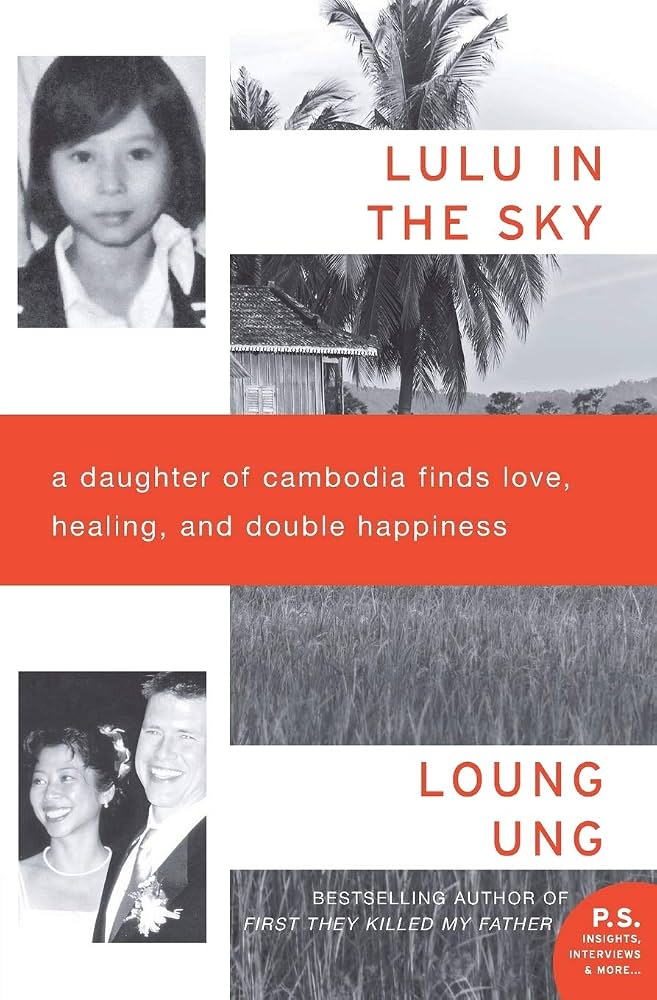
Loung Ung is a Cambodian-American author, activist, and public speaker best known for her memoir Lulu in the Sky (2005), the sequel to her bestselling book First They Killed My Father. Born in Cambodia in 1970, Ung survived the Khmer Rouge regime as a child, enduring forced labor camps, starvation, and the loss of much of her family. After escaping to a refugee camp, she eventually resettled in the United States, where she grew up and later became an advocate for human rights, particularly focusing on issues like landmines and social justice in Cambodia. Ung began sharing her story through writing to raise awareness about the Cambodian genocide and its lasting effects. Lulu in the Sky explores her life after the Khmer Rouge, focusing on her struggles with trauma, identity, and adjusting to life in America. Her work has received critical acclaim for its powerful storytelling and emotional honesty, and she continues to speak internationally about resilience, healing, and human rights.
Favorite quote: “Activism was my redemption, a tool to keep the darkness at bay.” Pp. 165
Thatiana’s Thoughts: Loung Ung’s first novel, First They Killed My Father, is extremely well known throughout the Cambodian community, due to the fact that it was made into a movie later on. I remember vividly watching this movie in middle school and sobbing into my pillow. I wanted to know more about Ung so I chose her third novel which talks about her life in America. It was interesting to see her go through schooling and how she used activism as her way of coping with what she went through.
Tan’s Donuts by Maya Cheav ⭐️⭐️⭐️⭐️⭐️/5
Maya Cheav is a Cambodian-American writer, poet, and artist from Southern California. She is the author of the poetry chapbooks LYKAIA (2023), Tan’s Donuts (2025), and By-the-Wind-Sailor (2026). Cheav’s writing often explores themes of Cambodian identity, family relationships, generational trauma, memory, and healing. Her work has appeared in literary journals such as OnlyPoems, The Oxonian Review, Scapegoat Review, and Across the Margin. A finalist for the 2023 Palette Poetry Chapbook Prize and a Tin House Workshop alum, Cheav has earned recognition for her emotionally rich and lyrical writing. In Tan’s Donuts, she tells the story of a Cambodian refugee and Khmer Rouge survivor adapting to life in the United States, using food, family history, and personal sacrifice to examine the immigrant experience and the lasting impact of war across generations.
Favorite quote: Strawberry and Cream Cheese Croissant Poem (the whole thing is beautiful.)
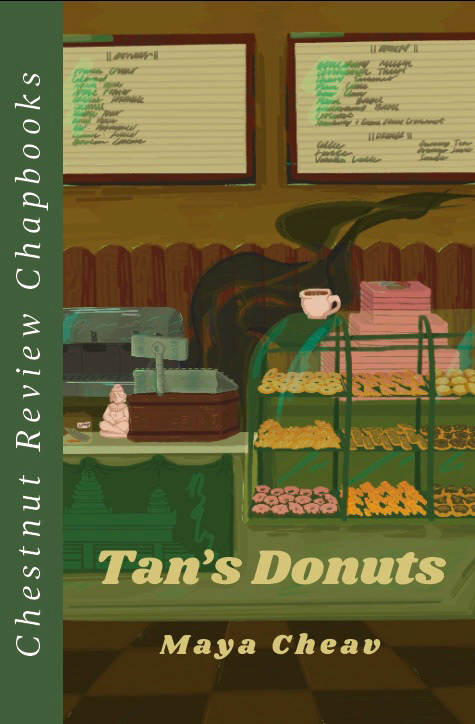
Thatiana’s Thoughts: Tan’s Donuts has a special place in my heart. When I was researching different texts to read for this research, I came across Cheav’s work and didn’t realize she was close in age to me! Her work is absolutely amazing. I cried multiple times. As this is a collection of poems, this was a quick but extremely impactful read. Through her writing, Cheav tells stories about the struggles that come with assimilating to America’s customs and how generational trauma bleads into everyday life.
Year of the Rabbit by Tian Veasna ⭐️⭐️⭐️⭐️/5
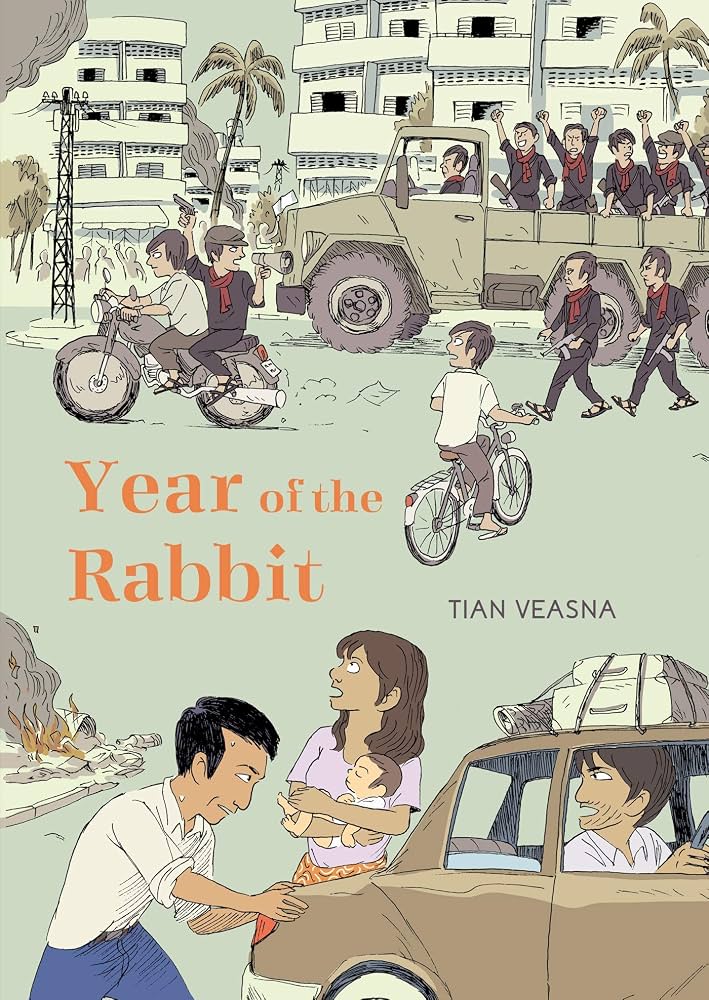
Tian Veasna is a Cambodian-French cartoonist, illustrator, and author best known for his graphic memoir Year of the Rabbit (2020). Born in Cambodia in 1975, just days after the Khmer Rouge seized power, Veasna spent his early childhood living through the aftermath of one of the twentieth century’s most devastating genocides. In 1980, he and his family immigrated to France, where he later studied art at the École des Arts Décoratifs in Strasbourg. After graduating, he returned to Cambodia to teach drawing and became involved in publishing and visual arts projects. Veasna eventually cofounded Le Bocal, a workshop and gallery dedicated to illustration and graphic art. Wanting to preserve his family’s experiences during the Khmer Rouge era, he interviewed relatives and transformed their memories into Year of the Rabbit, a powerful graphic memoir that documents survival, displacement, and resilience. His work has been praised for combining historical testimony with compelling visual storytelling.
Favorite quote: “Remember, Angkar has the eyes of a pineapple! It sees everything!” Pp. 238
Thatiana’s Thoughts: While I was in Long Beach, CA this past winter, I came across the Khmer translation of the Year of the Rabbit in Mark Twain’s Library. As I flipped through this graphic novel, it reminded me of Art Spiegelman’s Maus which I have read in DWC. When I am reading or listening to what my parents went through during the Khmer Rouge, it’s hard to picture but this graphic novel puts everything into perspective. I recommend everyone to read this graphic novel if they want to learn more about the Cambodian genocide and the resilience of Cambodian survivors.
All of the books on Thatiana’s reading list are available to borrow from Phillips Memorial Library. If you’d like to keep reading, explore how she brings these books together in her syllabus for a proposed course on Cambodian American literature.