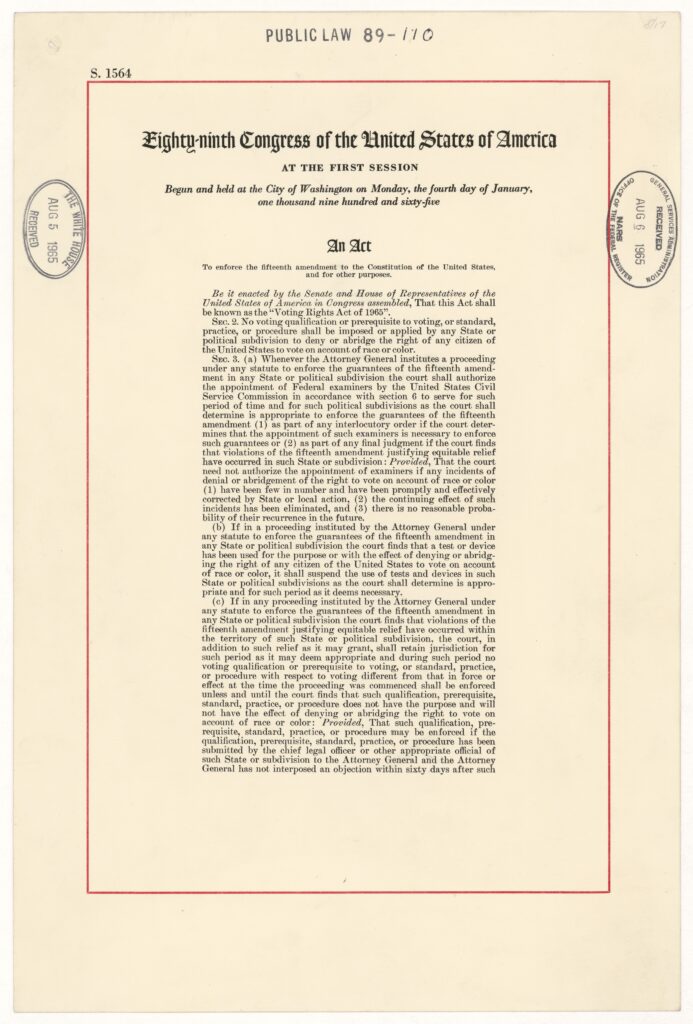

Voting Rights Act 1965
This exhibit is no longer on display.
It was on view in Phillips Memorial Library from August 2025 to December 2025. While the physical exhibit has concluded, you can still explore its highlights and legacy on this page.
The PC Archives and Special Collections is pleased to share our latest exhibit in honor of Constitution Day on September 17th.
Voting Rights Act 1965 highlights many of the PC ASC’s political and social organization collections.
The right to vote without threat of violence or prejudicial barriers was central to the American Civil Rights movement. In 1964, the 24th Amendment to the U.S. Constitution eliminated the use of poll taxes, removing one of the most effective and discriminatory tools used to restrict voting rights of minority and low-income citizens. Six months later, on July 2, 1964, the Civil Rights Act of 1964 was signed into law by President Lyndon B. Johnson.
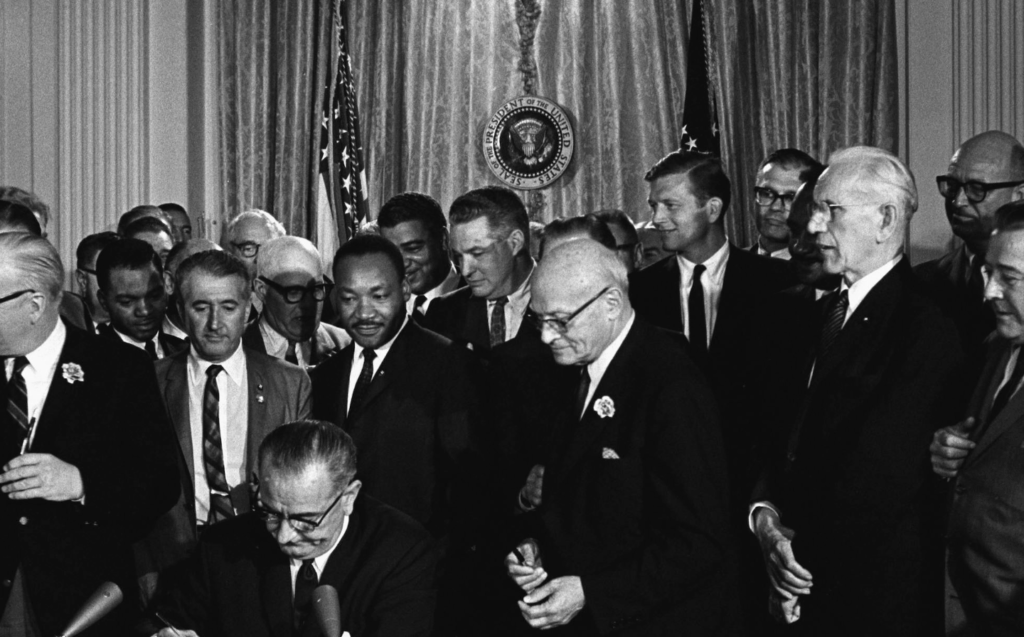
The continued efforts of those involved in the Civil Rights movement resulted in Congress passing the Voting Rights Act (VRA) in 1965, which aimed to secure the fundamental rights laid out in the 14th and 15th Amendments. In the years that followed, the Voting Rights Act was reinforced and expanded in 1970, 1975, 1982, and 2006, demonstrating a need for oversight and protection of the constitutional right to vote.
In 2013, the U.S. Supreme Court decision in Shelby County v. Holder deemed that some aspects and protections afforded by the VRA were no longer necessary and were unconstitutional. The effect of this decision was swift as many states moved to create more restrictive voting laws, which disproportionately impacted low income and minority voters. Voter rights and election laws continue to be extremely contentious and crucial issues across the country today.
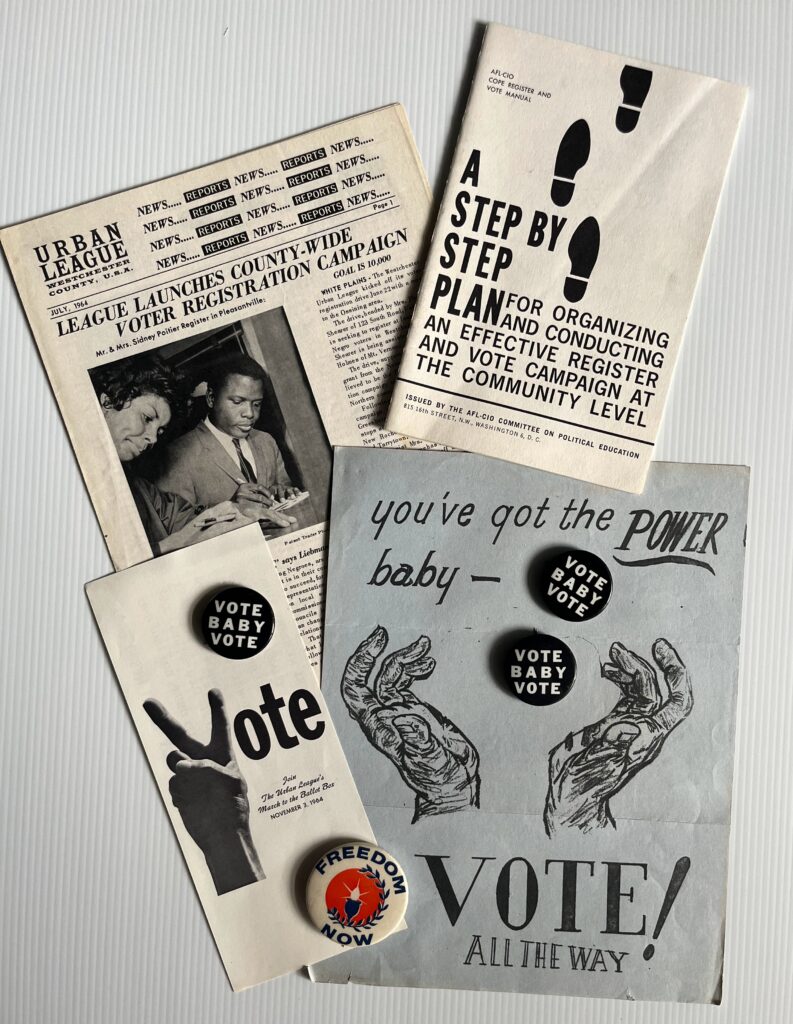
This exhibit highlights some of the efforts made in the 1960s which led to the passing of the Voting Rights Act.